


7 Surprising Signs of Aggressive Driving
You may feel like a confident driver, but are you dangerous? “No,” you may say, “I am an assertive driver.” There is a reason insurance premiums following a ticketTrending How Do Speeding Tickets Affect Your Insurance Defensive Driving can shock self-identified assertive drivers. The way we think about what distinguishes assertive, aggressive, and defensive drivingDefensive DrivingDefensive Driving often falls short. Road rageTrending Deadly Cost Road Rage Defensive Driving, be it the colorful mutterings under your breath or cutting off "bad drivers,” is only the extreme case. Most people in accidents have a good driving record. Nevertheless, daily life means that traffic delays, time crunches, rude drivers, and stress can leave us unaware of the safety threat boiling within otherwise good drivers. Even if it is not a habit, the occasional bad day can be a lethal day of aggressive driving. What if your life depended on staying calm?
Aggressive driving is a major contributor to the 6 million yearly car accidents in the U.S. Collisions are the leading cause of death for people 3 to 33 years old. And of the top 12 causes of fatal collisions, aggressive driving is a critical factor. Over 55% of fatal collisions are caused by aggressive driving.
Causes of Fatal Crashes That are Attributable to Aggressive Driving:
#1 Speeding
#4 Failing to yield the right-of-way
#6 Reckless driving, including common dangerous habitsTrending Top 10 Worst Driving Habits How Many Have You Done Defensive Driving
#8 Failing to obey traffic signs and signals
Still certain you are not an aggressive driver? Well, what if we told you that obeying traffic laws means slowing down for yellow lights and coming to a complete stop at stop signs? Are you always late to your destination? Are you frequently angry when driving? Being constantly in a hurry or upset frequently leads to aggressive driving and its consequences. The time saved may also be time and money lost in tickets, accidents, and injury. Avoiding the causes and signs of aggressive driving may lower your stress and chances of collision.
Signs You May Be an Aggressive Driver
Aggressive driving is extremely common: According to the AAA Foundation for Traffic Safety’s 2019 data, nearly 80% of drivers have expressed significant anger, aggression, or road rage behind the wheel at least once in the previous 30 days. However, for some drivers, aggressive driving can be a daily habit.
The seven most common signs of aggressive driving are: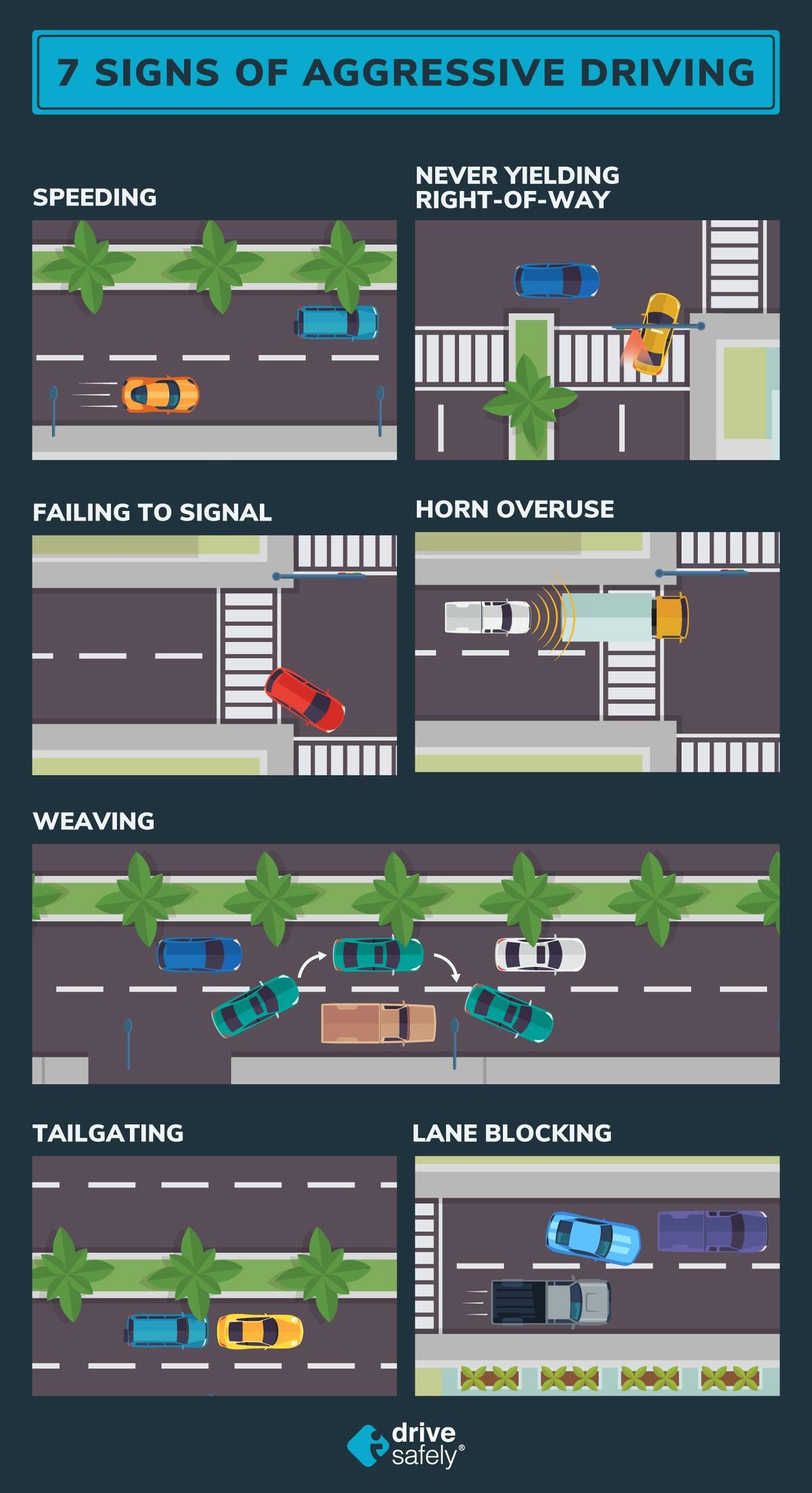
SPEEDING.
You are eternally in a rush and are annoyed by traffic, an inhumanly hectic schedule, and slow drivers who barely make the speed limit. You live in the fast lane. And, let’s face it, you think the left lane is for people like yourself, who are going much faster than everyone else, and not for those simply passing one or two people ahead of them.
NEVER YIELDING THE RIGHT-OF-WAY.
It’s always your turn. When someone hesitates to go, you gun it like it is a yellow light (which is also dangerous and a serious no-no). It seems to you that yielding is equivalent to losing a competition, and the whole world is full of timid and incompetent drivers.
WEAVING.
Frequent and unsafe lane changes are a part of everyday life. You think of this as efficiency. You spend most of your drive scanning for opportunities, crossing as many lanes as possible, and looking for cops. You get angry where there is space you cannot get into. You frequently pass using any open lane. And occasionally, you may even think about how you should have been a race car driver.
FAILING TO SIGNAL.
Last minute turns and opportunities to change lanes mean turn signals are afterthoughts. You are looking to get where you need to go as quickly as possible, with no holds (or turns) barred. Impatiently, you believe the road is a competitive battleground: what if someone speeds up because I put on my signal? With every blood pressure spike that occurs when other drivers fail to signal, you know in your heart of hearts the importance and courtesy of a timely signal.
TAILGATING.
You are never close enough (because someone is always in your way). You are constantly trying to communicate your priority on the road or intimidate others to move faster. You flash your lights. You tailgate. You find yourself suddenly breaking and accelerating regularly.
HORN OVERUSE.
The horn is not an anger management tool. Good car horn etiquetteTrending Avoid Aggressive Driving Following Dos And Donts Car Horn Etiquette Defensive Driving is important to a calm, safe drive for you and others sharing the road. A safe, even assertive, driver will rarely use the horn. Occasionally, it is a friendly “hello” to a distracted driver. An aggressive driver will lay on the horn.
LANE BLOCKING.
Deliberately preventing someone from merging or changing lanes. This is particularly ironic since most aggressive drivers believe that blocking the passing lane should be a corporal offense.
Become A Safer Driver Online
You have probably realized while reading this that impatient driving is aggressive driving. It is easy to allow the occasional strain to evolve into deadly habits. Aggressive Driver CoursesDefensive DrivingDefensive Driving and curriculum are increasingly being required in Drivers Ed and by state motor vehicle departments following violations. Road rage statistics show that approximately half of all drivers are prone to purposefully tailgate and/or yell at other drivers. Do not wait until it is too late. Plan ahead, drive safely, and enjoy the ride.
Take Your Defensive Driving Course Online
Updated August 11, 2022

How Defensive Driving Schools Can Curb Aggressive Driving
Dangerous drivers are everywhere and deadly--and they are not just road ragers. Here are some defensive driving tips and traits to help you and your passengers stay safe.

How to Get a Class A License for Commercial Driving
In most states, a Class A license is needed to operate a vehicle with two or more axles. Learn more about how to get a Class A license.

Five Signs You Might Have Road Rage
Many people have felt frustrated on the road however at times it can turn dangerous. Here are signs you can look for to see if you have road rage.
Looking for more driving resources?
Enter your email for deals, study materials, car maintenance tips, insurance savings, and more.